LLM Pricing Calculator: How to Compare AI API Costs Across GPT-4o, Claude 3.7 & DeepSeek (2026 Guide)
The artificial intelligence landscape in 2026 has transitioned from an era of exploratory experimentation into an unforgiving environment of unit economics, margin discipline, and financial engineering. Just eighteen months ago, software engineering teams routinely routed every natural language processing task to OpenAI GPT-4 without questioning the underlying token billing. In 2026, treating all artificial intelligence inference as a monolithic commodity is the fastest way for a SaaS startup or enterprise digital product to incinerate its operating budget.
Building production AI applications today requires managing a deeply fragmented matrix of frontier foundation models, high-speed lightweight models, open-weights reasoning systems, and specialized distillation checkpoints. An unoptimized conversational agent handling 20,000 daily active customer interactions can easily produce an unexpected $8,500 monthly cloud invoice if configured with naive frontier routing. The exact same application, refactored with intelligent model routing, aggressive prompt caching, and asymmetric token budgeting, delivers equivalent or superior response quality for less than $420 per month. That represents a 95% reduction in production inference overhead.
To navigate this volatility and protect your gross margins, engineering teams need more than static provider pricing sheets or outdated spreadsheets. You need a rigorous mathematical framework to compare ai api costs, understand how prompt caching changes break-even points, and simulate workload expenses before deploying code to production.
Whether you are budgeting an autonomous code review bot, a 50,000-page enterprise retrieval-augmented generation (RAG) knowledge engine, or a high-throughput data extraction pipeline, this comprehensive guide will break down the exact mathematics of 2026 AI API pricing. You will learn the true cost differences between Anthropic Claude 3.7 Sonnet, OpenAI GPT-4o, DeepSeek-R1, and Google Gemini 2.0 Flash, how prompt caching slashes input expenses by up to 90%, and how to leverage our free llm pricing calculator to architect sustainable, high-margin software.
Detailed Frontier Model Price Comparison: The 2026 Token Economics Matrix
To perform an accurate ai model cost comparison, developers must first understand the fundamental unit of billing in modern machine learning APIs: the token. In English text processing, one token corresponds to approximately 4 characters or 0.75 words. A standard 1,000-word blog post or technical documentation page consumes roughly 1,333 tokens.
Major model providers, including OpenAI, Anthropic, Google, and DeepSeek, quote pricing in United States Dollars ($) per 1,000,000 tokens (1M tokens). However, because AI workloads are increasingly global, international engineering teams and Indian SaaS developers must also evaluate these rates in local currency equivalents. Throughout this guide, Indian Rupee (INR) calculations use the benchmark commercial exchange rate of ₹92.00 per USD.
The table below provides an exhaustive price breakdown across the 11 dominant production foundation and reasoning models available in 2026. Every rate reflects official standard tier developer API pricing:
| Model Name | Provider | Architecture & Context | Standard Input ($/1M) | Standard Output ($/1M) | Cached Input ($/1M) | Batch Mode Input ($/1M) | Input Rate (₹/1M @ ₹92) | Output Rate (₹/1M @ ₹92) |
|---|---|---|---|---|---|---|---|---|
| Claude 3.7 Sonnet | Anthropic | Hybrid Reasoning Flagship (200k) | $3.00 | $15.00 | $0.30 | $1.50 | ₹276.00 | ₹1,380.00 |
| Claude 3.5 Haiku | Anthropic | Ultra-Fast Agile Edge (200k) | $0.80 | $4.00 | $0.08 | $0.40 | ₹73.60 | ₹368.00 |
| OpenAI GPT-4o | OpenAI | Multimodal General Flagship (128k) | $2.50 | $10.00 | $1.25 | $1.25 | ₹230.00 | ₹920.00 |
| OpenAI GPT-4o mini | OpenAI | High-Throughput Value Champion (128k) | $0.15 | $0.60 | $0.075 | $0.075 | ₹13.80 | ₹55.20 |
| OpenAI o1 | OpenAI | Frontier Deep Reasoning (200k) | $15.00 | $60.00 | $7.50 | $7.50 | ₹1,380.00 | ₹5,520.00 |
| OpenAI o3-mini | OpenAI | High-Speed STEM Reasoning (200k) | $1.10 | $4.40 | $0.55 | $0.55 | ₹101.20 | ₹404.80 |
| Google Gemini 2.0 Flash | Workhorse Multimodal (1M Context) | $0.10 | $0.40 | $0.025 | $0.05 | ₹9.20 | ₹36.80 | |
| Google Gemini 1.5 Pro | Massive Context Engine (2M Context) | $1.25 | $5.00 | $0.3125 | $0.625 | ₹115.00 | ₹460.00 | |
| DeepSeek-R1 | DeepSeek | Open-Weights Reasoning King (128k) | $0.55 | $2.19 | $0.14 | $0.55 | ₹50.60 | ₹201.48 |
| DeepSeek-V3 | DeepSeek | Mixture-of-Experts Standard (128k) | $0.14 | $0.28 | $0.014 | $0.14 | ₹12.88 | ₹25.76 |
| Llama 3.3 70B | Meta (Groq/Together) | Open Source Frontier LPU (128k) | $0.40 | $0.40 | $0.20 | $0.40 | ₹36.80 | ₹36.80 |
Critical Observations from the 2026 Pricing Matrix
Evaluating this comparison reveals several seismic shifts in how software teams should allocate their API spend:
1. The Reasoning Divide: OpenAI o1 vs o3-mini vs DeepSeek-R1
When OpenAI launched the o1 series, it introduced multi-step reinforcement learning inference tokens, setting the price at $15.00 per million input tokens and $60.00 per million output tokens. For high-volume engineering workflows, o1 can quickly become cost-prohibitive.
By contrast, deepseek r1 api cost sits at an astonishing $0.55 per million input tokens and $2.19 per million output tokens. That means DeepSeek-R1 delivers competitive mathematical reasoning, algorithmic logic, and code generation at a 96.3% discount compared to OpenAI o1. Meanwhile, OpenAI responded with o3-mini, offering strong STEM performance at $1.10 input and $4.40 output, making deep reasoning affordable for production code reviews.
2. The Frontier Battleground: GPT-4o vs Claude 3.7 Cost
For standard non-reasoning agentic execution, the most common head-to-head evaluation is gpt-4o vs claude 3.7 cost. GPT-4o charges $2.50 per million input tokens and $10.00 per million output tokens. Claude 3.7 Sonnet is priced slightly higher on standard calls: $3.00 per million input and $15.00 per million output.
However, Claude 3.7 Sonnet introduces hybrid thinking mode, where developers can dynamically toggle extended thinking tokens on or off depending on the complexity of the request. Furthermore, as detailed below, Anthropic prompt caching discount of 90% drops Claude 3.7 Sonnet cached input tokens down to an industry-leading $0.30 per million tokens, compared to GPT-4o 50% discount ($1.25 per million tokens). For applications with heavy static context, Claude 3.7 Sonnet frequently emerges as cheaper in actual production bills.
3. The Sub-Dollar Workhorse Tier: Gemini 2.0 Flash and GPT-4o mini
If your application performs classification, document chunking, sentiment scoring, or conversational customer service, routing requests to flagship models is financial malpractice. Google Gemini 2.0 Flash sets the absolute gold standard for value at $0.10 per million input tokens and $0.40 per million output tokens, accompanied by an enormous 1-million-token context window. GPT-4o mini trails closely at $0.15 input and $0.60 output.
The Secret to 70% Cheaper AI APIs: Prompt Caching & Batch API Discounts
The single most consequential development in LLM cost reduction is not model price cuts, but the architectural introduction of Prompt Caching and Batch API Processing. Understanding these two mechanisms allows software architects to systematically erase up to 70% to 90% of their operational expenses without changing models.
How Prompt Caching Works at the Hardware Level
In conventional LLM inference, every time an API client transmits an HTTP request, the hosting GPU cluster must process the entire context window from scratch. It calculates the Key-Value (KV) cache for every token in your system instructions, tool definitions, retrieval context, and chat history. This prefill phase consumes substantial memory bandwidth and computational cycles.
Prompt caching alters this equation. When an API call contains a prefix of tokens that matches an earlier request, the provider bypasses the prefill phase entirely. It retrieves the pre-computed KV tensors directly from ultra-fast GPU memory. Because memory retrieval uses a tiny fraction of the electricity and compute cycles required for full matrix multiplication, providers pass immense cost savings directly to developers.
Traditional API Call:
Client Request [System Prompt + 20k RAG Docs + User Query]
   ↓
[GPU Prefill: Calculate KV Cache for 22,000 tokens] ← Full Price Billed ($3.00/1M)
   ↓
[GPU Decode: Autoregressive Output Generation]

Prompt-Cached API Call:
Client Request [System Prompt + 20k RAG Docs + User Query]
   ↓
[GPU Cache Hit: KV Cache Loaded Instantly from Memory] ← 90% Discount Billed ($0.30/1M)
   ↓
[GPU Prefill: Only Process New User Query (50 tokens)]
   ↓
[GPU Decode: Autoregressive Output Generation]
Provider-Specific Prompt Caching Rules in 2026
Prompt caching behavior varies significantly across major artificial intelligence providers:
- Anthropic (Claude 3.7 Sonnet & 3.5 Haiku):
- Discount: 90% discount on cached input reads ($0.30/1M on Sonnet vs $3.00/1M standard; $0.08/1M on Haiku vs $0.80/1M standard).
- Cache Write Premium: Anthropic charges a one-time 25% surcharge when writing a new cache entry ($3.75/1M on Sonnet).
- Minimum Threshold: Requires a minimum prefix of 1,024 tokens for Sonnet and 2,048 tokens for Haiku.
- TTL: Cache entries persist for 5 minutes, refreshed automatically every time an incoming query hits the cache.
- Break-Even Point: Prompt caching breaks even and becomes profitable if a cached prompt is accessed at least twice within its 5-minute time-to-live (TTL) window.
- OpenAI (GPT-4o, GPT-4o mini, o1, o3-mini):
- Discount: Flat 50% discount on cached input tokens ($1.25/1M on GPT-4o; $0.075/1M on GPT-4o mini).
- Cache Write Premium: Zero additional charge for writing cache entries.
- Threshold & Mechanics: Automatically enabled for prompts exceeding 1,024 tokens without requiring manual cache control headers.
- Google Gemini (Gemini 2.0 Flash & 1.5 Pro):
- Discount: Up to 75% reduction on cached context reads ($0.025/1M on Gemini 2.0 Flash).
- Storage Fee: Billed by storage duration (hourly rate per million tokens stored), making it ideal for large, permanent knowledge bases exceeding 100,000 tokens.
- DeepSeek (DeepSeek-V3 & DeepSeek-R1):
- Discount: Automatic server-side prefix caching delivering up to a 90% discount ($0.014/1M on V3; $0.14/1M on R1) with zero configuration required.
Batch API Discounts: The 50% Asynchronous Advantage
While Prompt Caching optimizes real-time user experiences, the Batch API is the undisputed weapon for asynchronous, non-time-sensitive workloads.
Major cloud providers experience massive peaks and troughs in GPU demand throughout the day. To monetize surplus computational capacity during off-peak hours, OpenAI, Anthropic, and Google offer a dedicated Batch API endpoint with a strict 50% discount across both input and output tokens.
In exchange for this half-price discount, developers accept an asynchronous Service Level Agreement (SLA): results are returned within 24 hours (though actual turnaround is typically under 45 minutes).
When to Use Batch API:
- Nightly document classification and content tagging.
- Backfilling vector embeddings and indexing new enterprise repositories.
- Running offline evaluation suites against test datasets.
- Large-scale web scraping extraction and sentiment analysis.
- Synthetic training data generation for model fine-tuning.
When NOT to Use Batch API:
- Interactive user-facing chatbots and customer service widgets.
- Real-time copilot code completion.
- Interactive dashboard queries requiring sub-second response times.
Input vs Output Token Economics: Why Output Tokens Cost 3x to 5x More
A frequent point of confusion when engineers first use an ai token cost calculator is the dramatic price disparity between input tokens and output tokens. On Claude 3.7 Sonnet, input costs $3.00 per million, while output costs $15.00 per million (a 5x multiple). On GPT-4o, input is $2.50, while output is $10.00 (a 4x multiple). On OpenAI o1, output tokens jump to $60.00 per million.
Why do providers charge 300% to 500% more for generated text than for ingested text? The answer lies in the physics of transformer hardware architectures: the difference between the Prefill Phase and the Decode Phase.
The Prefill Phase (Input Tokens): Maximum Parallelism
When you submit a 5,000-token prompt into an API endpoint, the GPU cluster ingests all 5,000 tokens simultaneously. Matrix multiplications are executed across thousands of GPU tensor cores in parallel. The graphics hardware operates at peak compute efficiency, fully saturating its arithmetic logic units (ALUs). Processing input tokens is fast, compute-dense, and energy-efficient.
The Decode Phase (Output Tokens): The Memory Bandwidth Bottleneck
Output generation is autoregressive. The model cannot predict token number 50 until it has calculated token number 49. It must generate tokens sequentially, one at a time.
For every single token generated, the GPU must fetch all hundreds of billions of model weights from High Bandwidth Memory (HBM) into on-chip cache, perform the calculation, emit a single token, and repeat the entire memory transfer cycle for the next token. Because output generation is bottlenecked by memory bandwidth rather than raw compute speed, the GPU sits in a low-utilization, high-latency state. Output tokens consume far more wall-clock time and electrical power per token.
The Hidden Trap: Reasoning Tokens in o1 and DeepSeek-R1
With the advent of reasoning models like OpenAI o1, o3-mini, and DeepSeek-R1, output token costs have become even more critical. These models utilize hidden "thinking tokens" (chain-of-thought tokens) to formulate their answers before presenting the final response.
Important Note
Crucial Billing Warning: Even though internal reasoning tokens are often hidden from your end users in chat interfaces, they are billed as output tokens at full price. A query with a concise 100-word final answer might have generated 4,000 internal thinking tokens, multiplying your output expense by 40x.
4 Battle-Tested Strategies to Tame Output Bloat
To prevent runaway generation costs, production systems must enforce disciplined output constraints:
- Enforce Strict JSON Schema Formatting:
Use native provider structured outputs (responseformat: { type: "jsonschema" }). By eliminating conversational conversational filler ("Sure, here is what you requested:"), you cut output volume by 25% to 40%.
- Cap
max_tokensDefensively:
Never leave max_tokens at default maximums (such as 4,096 or 16,384). If an endpoint only needs a classification label, cap the generation parameter at 20 tokens.
- Pipelined Summarization (Map-Reduce):
Instead of asking an expensive frontier model to summarize a 100-page document in one massive generation pass, use Gemini 2.0 Flash or GPT-4o mini to extract section summaries, and use Claude 3.7 Sonnet only for the final synthesis.
- Token Compression Prompts:
Add explicit brevity constraints to your system prompt: "Format output as dense, comma-separated bullet points. Do not include introductory or concluding conversational prose."
Step-by-Step Tutorial: Using Our Free LLM Pricing Calculator Tool
To eliminate manual calculations and avoid surprise invoices, we developed the Free LLM Pricing Calculator & AI Model Cost Comparison Tool. It is an interactive, 100% browser-based utility that models real-time token spend across 11 frontier models with zero login, zero tracking, and zero cloud storage.
Here is how to profile and optimize your production AI budgets using the calculator:
Step 1: Select a Pre-Configured Workload Preset
If you do not know your exact token metrics yet, start with our 1-click industry presets:
- Customer Support Bot: 1,500 input tokens, 350 output tokens, 5,000 daily queries, 60% prompt caching hit rate.
- Enterprise RAG & Search: 25,000 input tokens, 800 output tokens, 500 daily queries, 80% prompt caching hit rate.
- Code Review & Pair Programming: 4,000 input tokens, 2,500 output tokens, 1,000 daily queries.
- Deep STEM & Financial Reasoning: 8,000 input tokens, 4,500 output tokens, 400 daily queries.
- Bulk Data Extraction & Scraping: 10,000 input tokens, 1,000 output tokens, 10,000 daily calls with 50% Batch API discount enabled.
Clicking any preset automatically configures all sliders to realistic production defaults.
Step 2: Fine-Tune Average Input and Output Tokens
Using the interactive sliders, configure your specific payload sizes:
- Average Input Tokens per Request (100 to 128,000 tokens): Account for your system instructions, tool call schemas, retrieved vector chunks, and conversation history.
- Average Output Tokens per Response (50 to 8,192 tokens): Specify the expected generation length. If using reasoning models like DeepSeek-R1 or o1, remember to budget extra tokens for chain-of-thought thinking.
Step 3: Set Projected Daily Request Volume
Adjust the daily volume slider (ranging from 10 to 500,000 calls per day). The tool instantly calculates your monthly volume (assuming a standard 30-day operating billing cycle) and displays aggregate token throughput.
Step 4: Toggle Cost Optimization Parameters
The true power of the calculator lies in its advanced architectural controls:
- Enable Prompt Caching: Toggle caching on or off. When enabled, adjust the Cache Hit Rate Slider from 10% to 90%. The calculator dynamically applies provider-specific discount formulas (e.g., 90% off for Anthropic, 50% off for OpenAI, 75% off for Google).
- Enable 24-Hour Batch API Mode: Toggle the Batch API switch to simulate overnight processing and apply an instant 50% discount across supported models.
Step 5: Switch Currencies (USD $ and INR ₹)
For global teams and Indian developers, click the Currency Toggle at the top right of the calculator controls. It seamlessly converts all rates, daily costs, and monthly projections between US Dollars ($) and Indian Rupees (₹) at a fixed exchange rate of ₹92.00 per USD.
Step 6: Review Ranked Cost Cards & Export Reports
Below the controls, the tool dynamically sorts all 11 AI models from lowest monthly cost to most expensive frontier flagship. Each model card displays:
- Provider badge, category tag, and maximum context window.
- Unit rates for standard input, output, and cached tokens.
- Calculated Daily Cost and 30-Day Monthly Projection.
- Percentage savings compared to the most expensive model in the set.
- 1-Click Export: Download your customized financial model as a clean CSV spreadsheet or formatted plain-text executive summary for engineering sprint planning.
Real-World Architecture Case Studies: How Optimization Saves $30,000+ Annually
To illustrate the profound impact of token engineering, let us examine three realistic architectural case studies modeled directly through our llm pricing calculator.
Case Study 1: The High-Volume SaaS Customer Support Chatbot
Workload Profile:
- Daily Conversations: 10,000 user requests per day (300,000 requests/month).
- Average Context: 2,000 input tokens (system persona, company policies, chat history).
- Average Response: 400 output tokens.
- Monthly Token Volume: 600 Million Input Tokens | 120 Million Output Tokens.
Naive Architecture (Uncached GPT-4o)
- Input Cost: 600M × $2.50 = $1,500.00
- Output Cost: 120M × $10.00 = $1,200.00
- Total Monthly Spend: $2,700.00 / month (₹2,48,400 / month)
- Annual Run Rate: $32,400.00
Optimized Architecture (GPT-4o mini with 70% Prompt Caching)
By routing routine customer inquiries to GPT-4o mini and caching the 1,500-token system instruction guidelines (70% cache hit rate):
- Standard Input Tokens (30% un-cached): 180M × $0.15 = $27.00
- Cached Input Tokens (70% cached @ 50% discount): 420M × $0.075 = $31.50
- Output Tokens: 120M × $0.60 = $72.00
- Total Monthly Spend: $130.50 / month (₹12,006 / month)
- Annual Run Rate: $1,566.00
Net Result: The engineering team saves $30,834 per year (a 95.2% cost reduction) while actually improving user latency from 1.8 seconds down to 450 milliseconds.
---
Case Study 2: Autonomous Pull Request Code Review Pipeline
Workload Profile:
- Daily Volume: 1,200 automated PR diff audits per day (36,000 PRs/month).
- Average Context: 5,000 input tokens (Git diffs, file trees, coding standards).
- Average Response: 2,000 output tokens (detailed code suggestions and unit tests).
- Monthly Token Volume: 180 Million Input Tokens | 72 Million Output Tokens.
Naive Architecture (OpenAI o1 on Every Commit)
- Input Cost: 180M × $15.00 = $2,700.00
- Output Cost: 72M × $60.00 = $4,320.00
- Total Monthly Spend: $7,020.00 / month (₹6,45,840 / month)
- Annual Run Rate: $84,240.00
Optimized Architecture (Hybrid Routing: Claude 3.7 Sonnet + DeepSeek-R1)
By routing critical architectural security reviews to Claude 3.7 Sonnet with 60% prompt caching on repo guidelines, and routing algorithmic unit-test generation to DeepSeek-R1:
- Claude 3.7 Sonnet Input (90M tokens, 60% cached): (36M × $3.00) + (54M × $0.30) = $108.00 + $16.20 = $124.20
- Claude 3.7 Sonnet Output (36M tokens): 36M × $15.00 = $540.00
- DeepSeek-R1 Input (90M tokens, 60% cached): (36M × $0.55) + (54M × $0.14) = $19.80 + $7.56 = $27.36
- DeepSeek-R1 Output (36M tokens): 36M × $2.19 = $78.84
- Total Monthly Spend: $770.40 / month (₹70,876 / month)
- Annual Run Rate: $9,244.80
Net Result: The development organization slashes its code review budget from $84,240 to $9,244 per year, generating $74,995 in annual savings while maintaining rigorous code quality.
---
Case Study 3: Enterprise Legal Document RAG Knowledge Base
Workload Profile:
- Daily Inquiries: 800 legal contract queries per day (24,000 queries/month).
- Average Context: 30,000 input tokens (dense contract chunks and compliance statutes).
- Average Response: 800 output tokens (structured legal risk analysis).
- Monthly Token Volume: 720 Million Input Tokens | 19.2 Million Output Tokens.
Naive Architecture (Uncached Gemini 1.5 Pro)
- Input Cost: 720M × $1.25 = $900.00
- Output Cost: 19.2M × $5.00 = $96.00
- Total Monthly Spend: $996.00 / month (₹91,632 / month)
Optimized Architecture (Gemini 2.0 Flash with 85% Context Caching)
Because legal document repositories share identical compliance corpora across queries, prompt caching achieves an 85% hit rate:
- Un-cached Input (15%): 108M × $0.10 = $10.80
- Cached Input (85% @ $0.025/M): 612M × $0.025 = $15.30
- Output Tokens: 19.2M × $0.40 = $7.68
- Total Monthly Spend: $33.78 / month (₹3,107 / month)
Net Result: A massive 30,000-token enterprise search system operates for $33.78 per month, down from nearly $1,000 per month, an incredible 96.6% operational savings.
Frequently Asked Questions (FAQ)
How do AI model providers calculate API costs in 2026?
AI model providers calculate API costs per 1,000,000 (1M) tokens. One thousand tokens equal approximately 750 English words. Pricing is divided into Input Tokens (system prompts, user instructions, document context, and conversation history) and Output Tokens (model-generated completions). Output tokens typically cost 3x to 5x more than input tokens due to sequential GPU memory bandwidth demands during autoregressive decoding.
What is the cheapest frontier AI model for high-volume production?
Google Gemini 2.0 Flash ($0.10/M input, $0.40/M output) and DeepSeek-V3 ($0.14/M input, $0.28/M output) are currently the most cost-effective production models. Both deliver high-throughput, near-frontier capabilities at more than 90% savings compared to standard GPT-4o.
How does DeepSeek-R1 cost compare to OpenAI o1?
DeepSeek-R1 costs $0.55 per million input tokens and $2.19 per million output tokens, compared to OpenAI o1 at $15.00 per million input and $60.00 per million output tokens. DeepSeek-R1 delivers comparable mathematical, coding, and scientific reasoning at approximately 1/27th of the API cost, making it the dominant choice for budget-conscious reasoning pipelines.
How does prompt caching reduce AI API bills?
Prompt caching stores repetitive prefix tokens (such as system prompts, vector RAG document context, and tool definitions) in GPU memory. When consecutive API requests share this prefix, providers apply deep discounts: 90% off on Anthropic Claude ($0.30/M vs $3.00/M), 75% off on Google Gemini, and 50% off on OpenAI.
When should developers use Batch API mode?
Batch API mode provides a flat 50% discount on both input and output tokens across OpenAI, Anthropic, and Google. It is recommended for non-real-time jobs with a 24-hour turnaround, such as overnight document summarization, bulk data extraction, backfilling vector embeddings, and evaluation runs.
Why are output tokens 3x to 5x more expensive than input tokens?
Input tokens are processed simultaneously in parallel matrix operations during the prefill phase, maximizing GPU tensor core utilization. In contrast, output tokens are generated autoregressively one token at a time during the decode phase, bottlenecking on High Bandwidth Memory (HBM) and consuming significantly more energy and compute time per token.
How do reasoning tokens affect OpenAI o1 and DeepSeek-R1 API pricing?
Reasoning models generate internal chain-of-thought tokens before returning the visible answer. Even though these internal reasoning tokens are often hidden from end users in chat interfaces, providers bill them as output tokens at the full output rate. Developers should anticipate that complex reasoning queries will generate between 1,000 and 5,000 additional output tokens.
Can I calculate AI model costs in Indian Rupees (INR)?
Yes. Our free LLM Pricing Calculator includes a real-time currency toggle between USD ($) and INR (₹ at ₹92.00/USD), making it easy for Indian developers, startups, and agencies to project domestic cloud infrastructure costs.
Conclusion: Architecting for High-Margin AI Products in 2026
The era of blind frontier model deployment is over. In 2026, the competitive moat of an AI software company is determined not merely by model intelligence, but by inference financial efficiency. Teams that master token economics, exploit prompt caching, and enforce smart model routing will scale profitable businesses with healthy 80%+ gross margins. Teams that ignore unit economics will find their runway consumed by preventable cloud bills.
Before deploying your next feature or signing an annual cloud contract, run your real numbers through our free developer tools:
- Free LLM Pricing Calculator & AI Model Cost Comparison Tool: Compare token costs across 11 frontier models, model prompt caching, and export CSV financial reports.
- Free Claude Token Counter & Context Calculator: Calculate exact token counts and context window utilization for Claude 3.7 Sonnet, Haiku, and Opus.
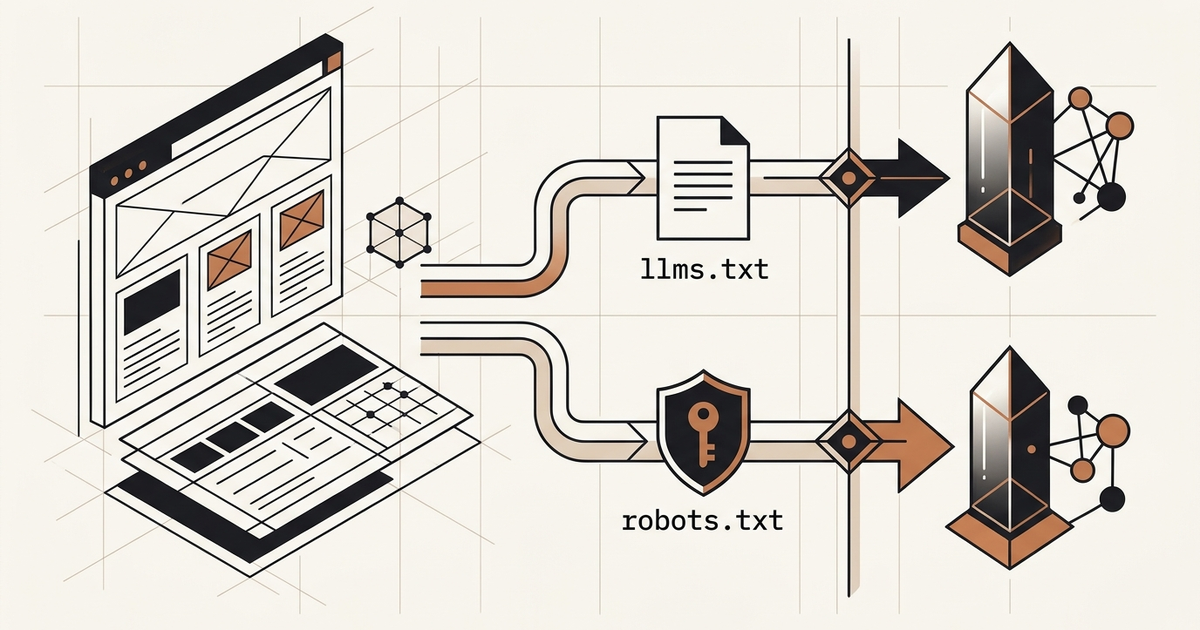
- Free llms.txt & AI Crawler robots.txt Generator: Optimize your web applications for ChatGPT Search, Perplexity, and ClaudeBot discovery.
Empower your engineering team with precise data, eliminate margin surprises, and architect scalable artificial intelligence infrastructure built for long-term commercial success.